


I think we can all agree the last month has been a whirlwind of news and frankly an overload of information. While it has felt like the world has been on fire, the looming threat of AI on the information economy has grown both in awareness and as a realistic concern. Many of the tropes and rallying cries of vibe coders online are finally bleeding into the mainstream, after being taken with various degrees of seriousness throughout 2025.
To distill it down: Utilizing AI to rapidly ‘build whatever’ is quickly reshaping how we think about the value of software products and services. The moat is data and domain expertise.
The State of SaaS in 2026
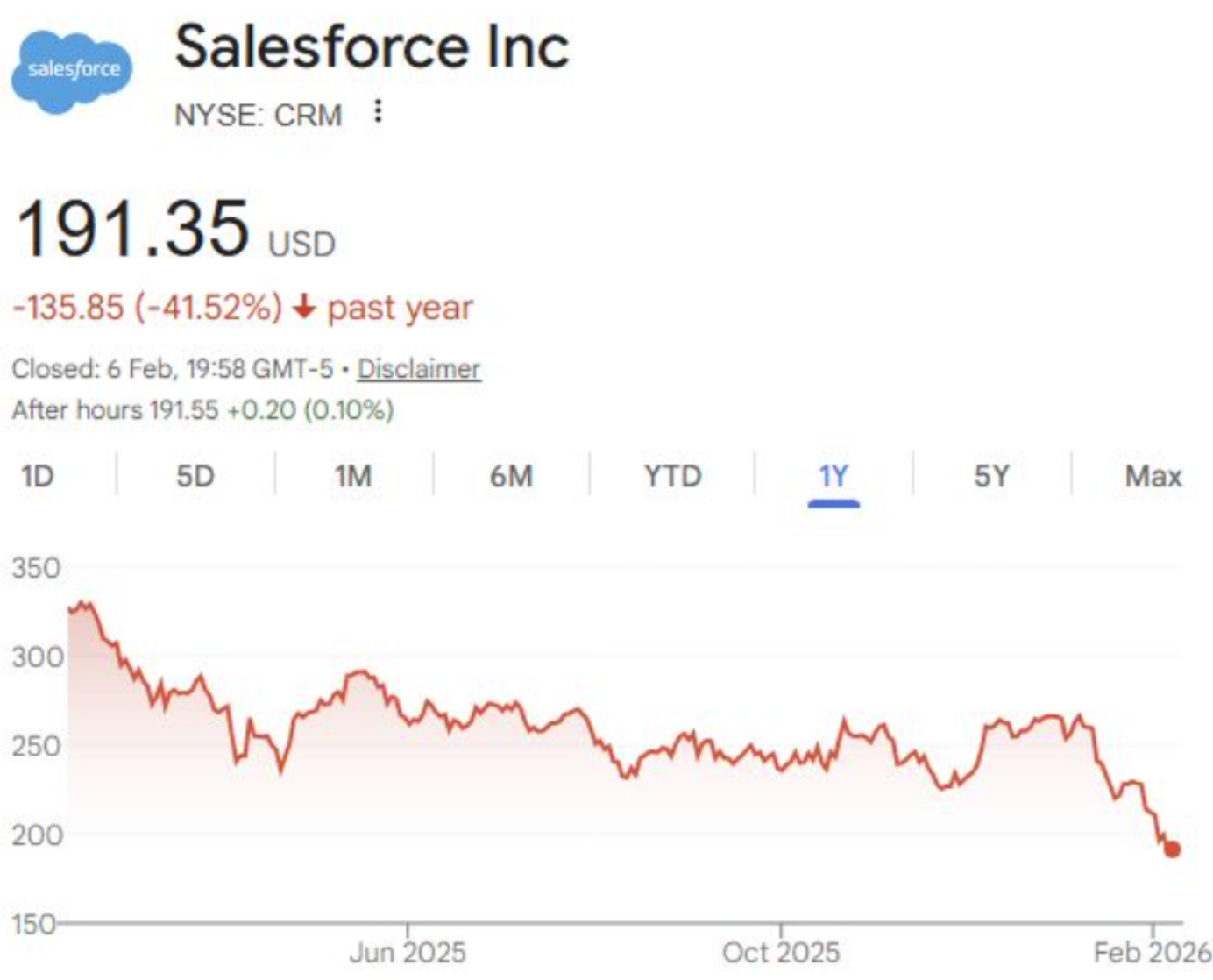
Last week, software and service stocks shed $830 billion in market value in six trading days. This is nothing to scoff at, and isn’t purely fear. For every person that is still highly skeptical of the usefulness of AI coding tools like Claude Code, there are many who have been effectively AI-pilled. We’ve used the software, seen the trajectory and the speed of progress, and feel confident in where this is heading.
Even prior to this, SaaS revenue growth was slowing, it has become easier than ever to build smaller, in-house tools rather than subscribing to bloated SaaS packages, the majority of which have features you’ll never truly need or want to use.
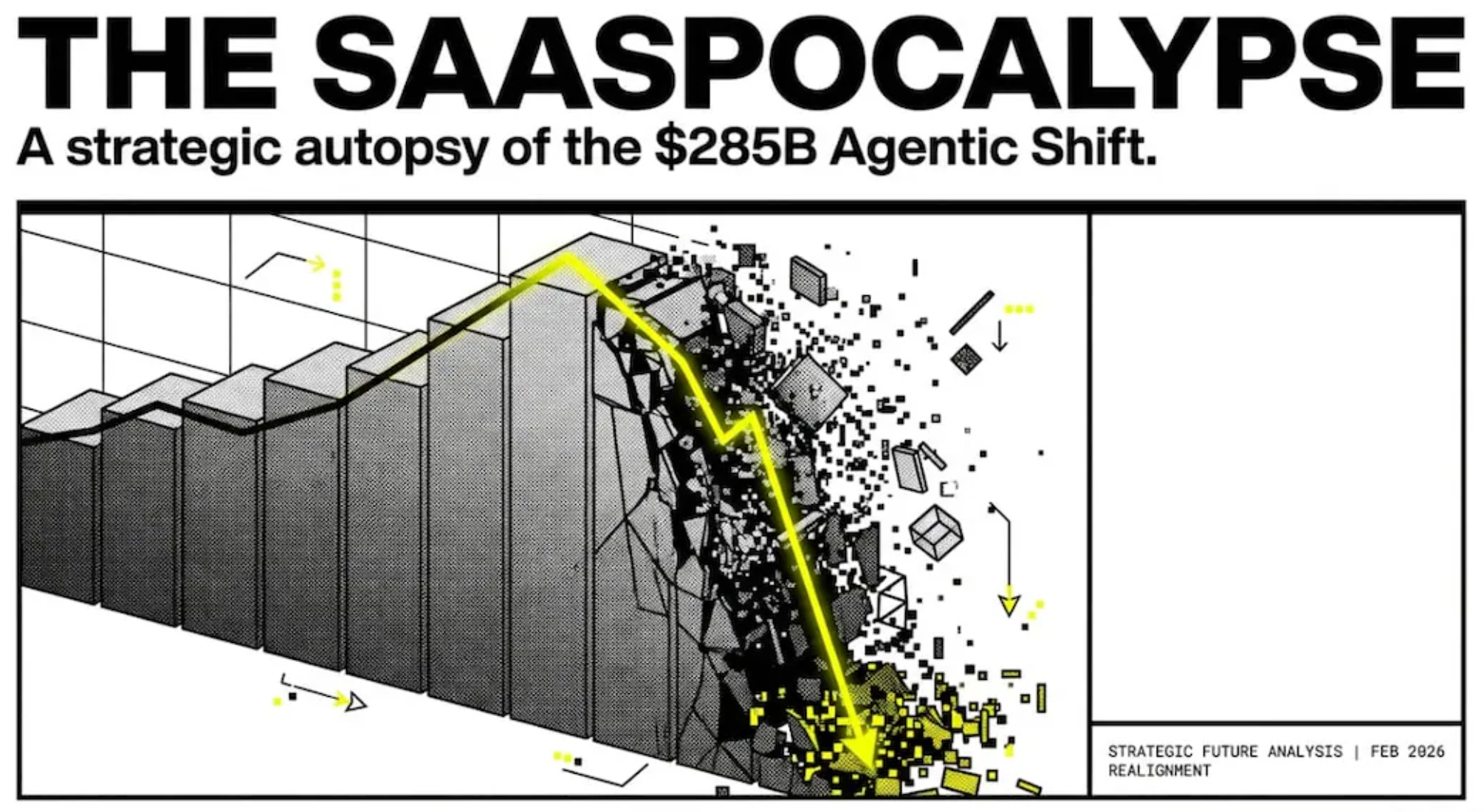
I touched on this last week, and it becomes more true with every passing day: the market is rewarding the smallest companies that move the fastest. AI has been often compared to a spice when cooking: it should complement the dish, but shouldn’t be the main course. And even beyond small companies, it’s becoming even easier to just build whatever you personally need in a single afternoon, slashing your monthly bills and easily creating something that is easier to use and is custom tailored just for you.
This time in 2025, this was possible but wasn’t anywhere near as convenient or fast. Things really sped up with Opus 4.5, and there’s really no turning back.
Let’s be clear: SaaS isn’t going away. There’s still a ton of value in products like Salesforce, and enterprise moves at a snail’s pace to migrate away from software deeply enmeshed in their ways of working. But, for every product that is complex with 20+ years of tested and secure business logic, there are tools that can be built and deployed in a single week that can handle 90% of your use-cases.
Business logic, system design, compliance, performance, scalability, and a battle-tested user experience take time. These aren’t things that can be immediately automated and built by AI overnight. But, one could argue that smaller teams can now move much quicker to replicate similar systems, and offer SaaS services at a fraction of the price of their competitors.
Over the last month, I’ve given myself a personal experiment: how many tools or random things that I paid for could I eliminate by simply creating them myself?
The DIY Everything Month
My rule for January was this: if there was a new subscription or tool I needed to buy or renew, I wanted to see how viable and quick it would be to simply create it myself.
Obviously many tools are wildly impractical to build or maintain on your own. For example, I use Google Drive for storing important files, but I also have a remote computer on a personal network that has that data redundantly stored. For a knowledge base tool like Notion, I could obviously use something like Obsidian and plugins, but the experience is drastically worse. I like Notion, and I feel fine paying for it (especially when utilizing the recent agentic features).
However, there are tools and services that I constantly find myself oscillating between being able to rationalize paying for. I could think of no better example of software I wanted to never pay for again than Speechify.
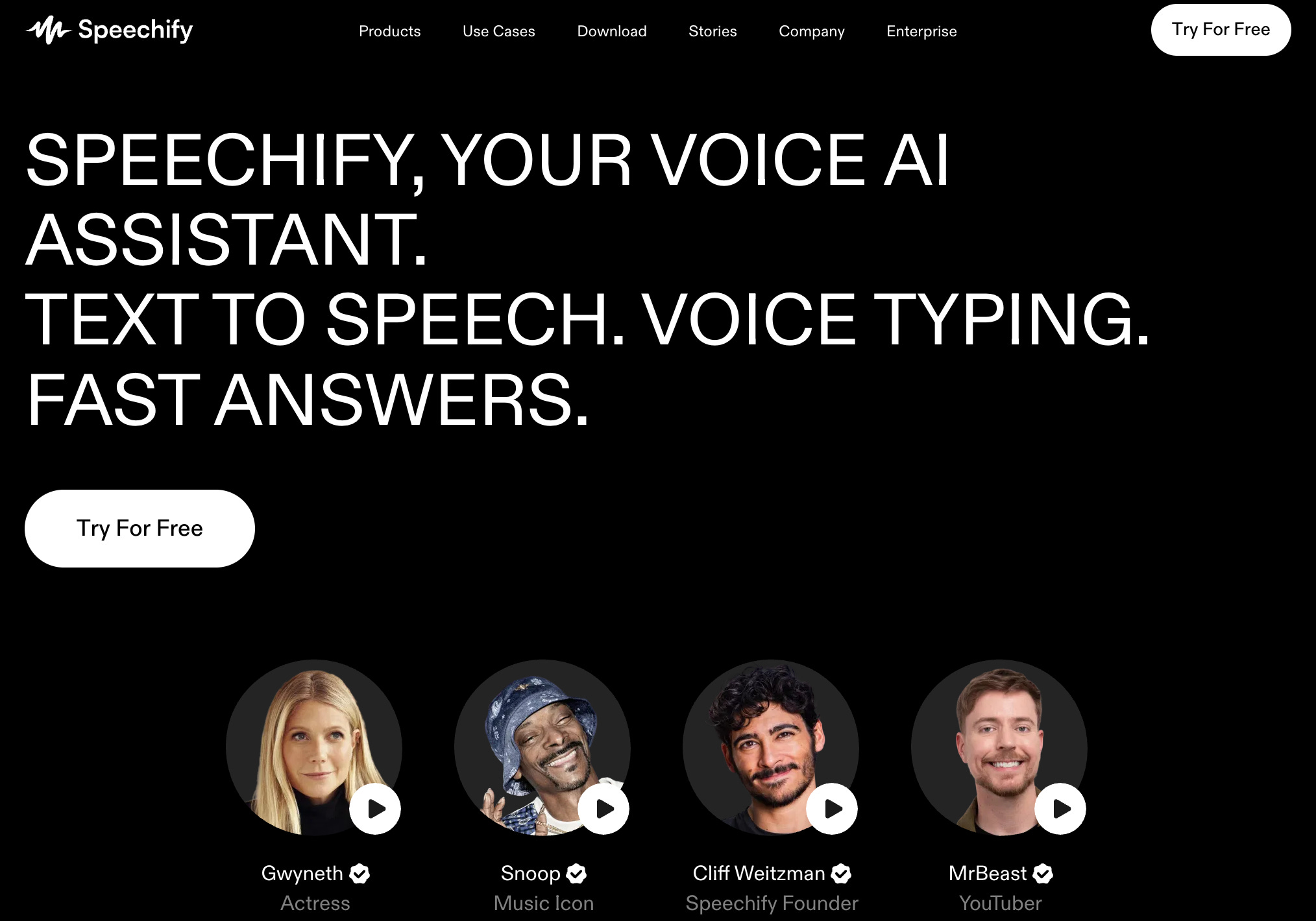
My need was pretty simple. I liked the interface of Speechify, and the ability to just dump in a ton of text and make an audio file to listen to while walking. Easy enough. The pricing tiers for Speechify are brutal: 29 bucks a month for Premium, offering hundreds of voices, offline listening, and OCR scanning.
Great. If you’re anything like me, you probably find a couple voices you like and then stick with those. All you really want is an app to just store a few transcriptions and use the app like Spotify. How hard could it be to host and make an Android app?
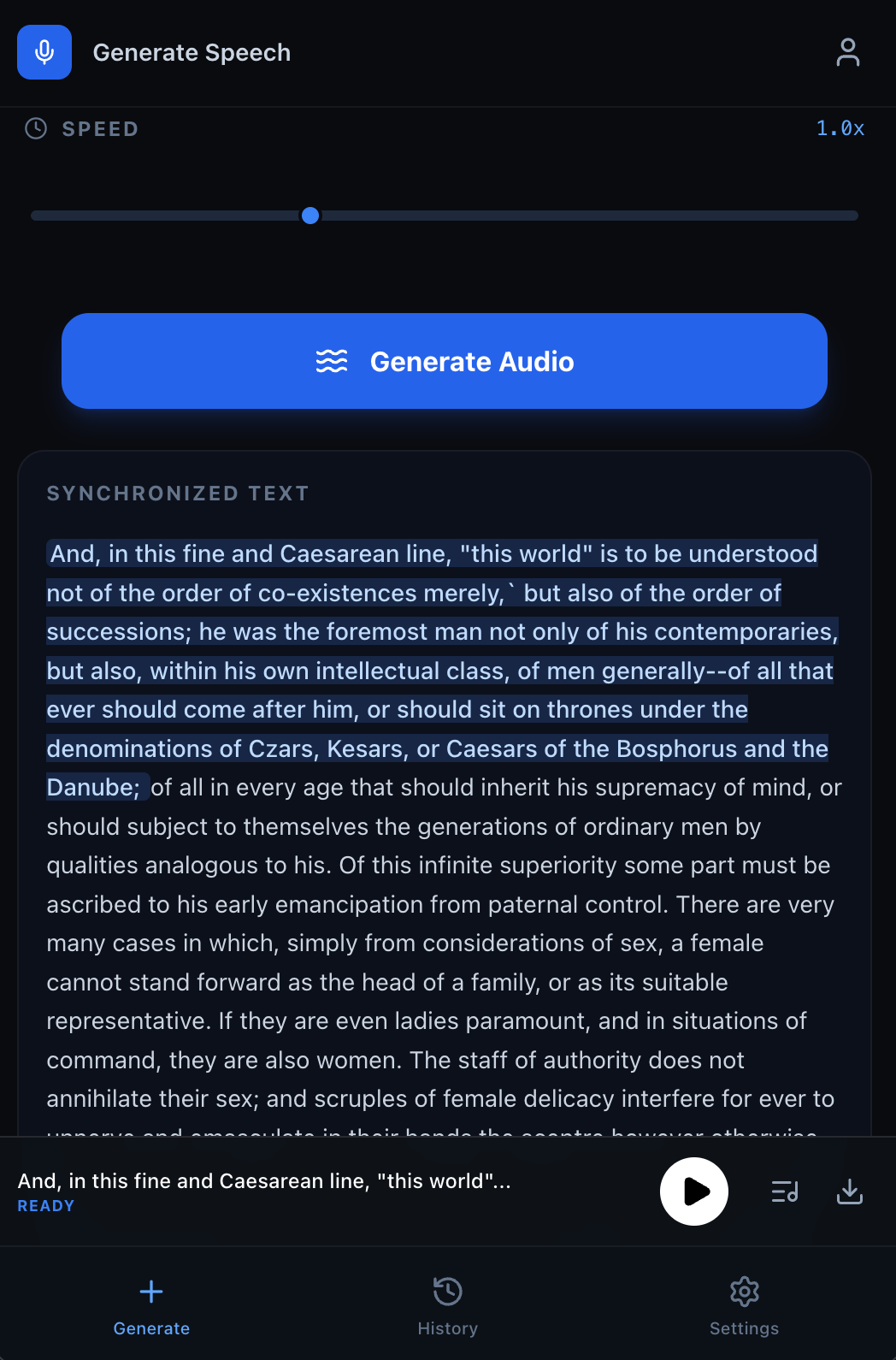
Turns out, pretty easy. I came up with a simple plan to find open source solutions to integrate into my personal app, and Open Mobile TTS was born. Kokoro TTS is fast enough to easily run on a personal VPS (I’ve been using Zo Computer). It has all of the features I was regularly using with Speechify, and looks good enough that I don’t give it a second thought.
Within a couple of hours, Open Mobile TTS was up and running on my personal server, and I was using it on my phone on the go. It did require some technical troubleshooting, but I was quickly satisfied with the results. The look and feel of the app was close enough to something that felt professional, and it didn’t feel like a compromise.
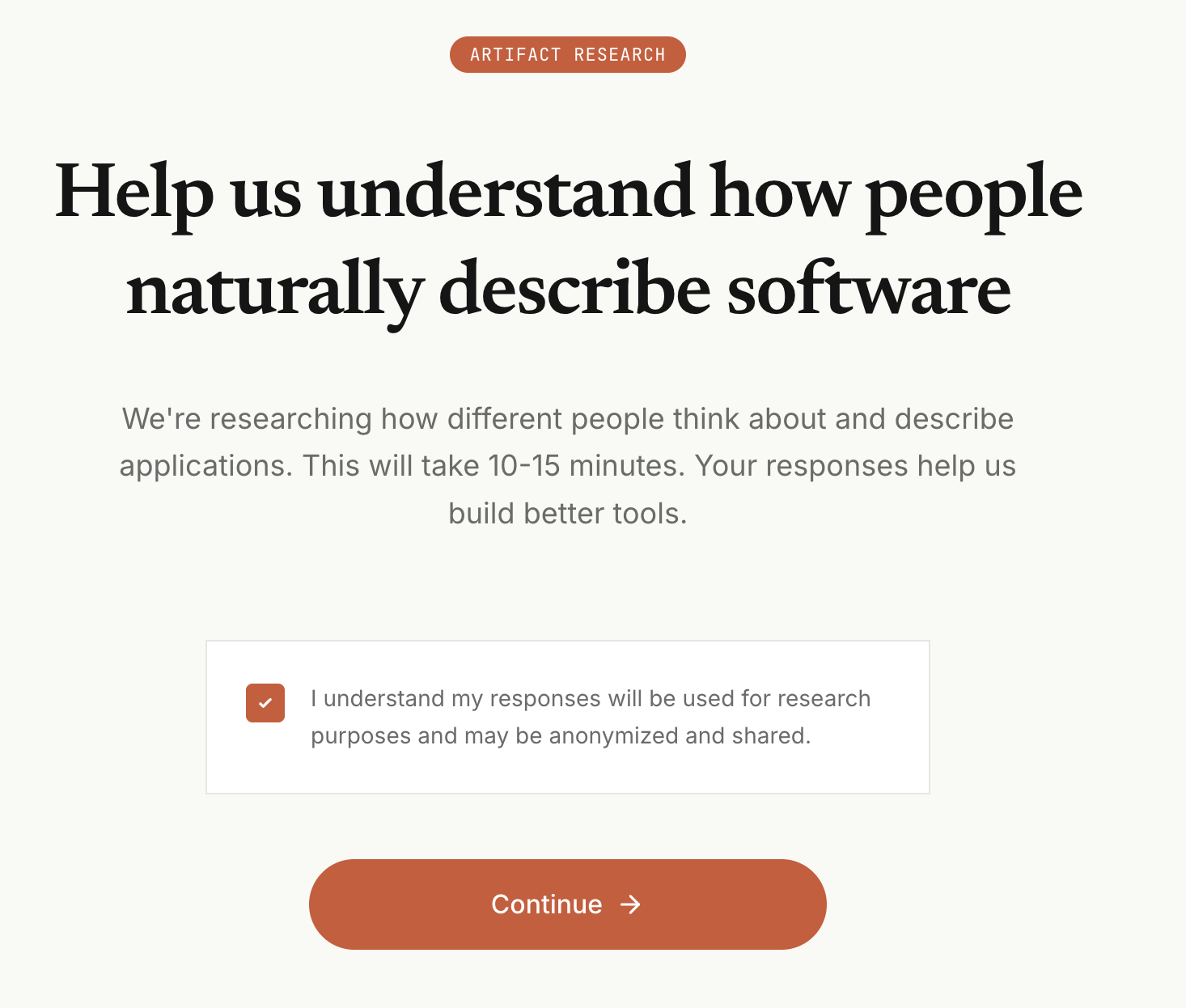
There were multiple examples similar to this during the month of January for me. One week, the project I’m working on needed to conduct a survey. Instead of paying for Typeform, we just built a clone, complete with a backend. Easily able to pull data, run analytics, and make adjustments on the fly, all without paying a monthly fee or digging through unnecessary features we didn’t need. If I saw a UI design I liked, I’d just replicate it using Gemini and Claude and iterate until it worked.
Because I’ve visited Japan many times in the last year, I found myself constantly needing to convert things: currency, temperature, clothing sizes, etc. I wanted a simple app where I could just convert things quickly with a single hand, while walking around. It didn’t exist.

Thus, JapanConvert was born. I no longer had to sit through annoying ads on the previous currency conversion software I had on my phone that I wasn’t willing to pay for. Instead, I simply integrated free APIs into the app that were more accurate than the app I was formerly using. JapanConvert ended up being faster, ad free, and exactly what I needed. It was a win.
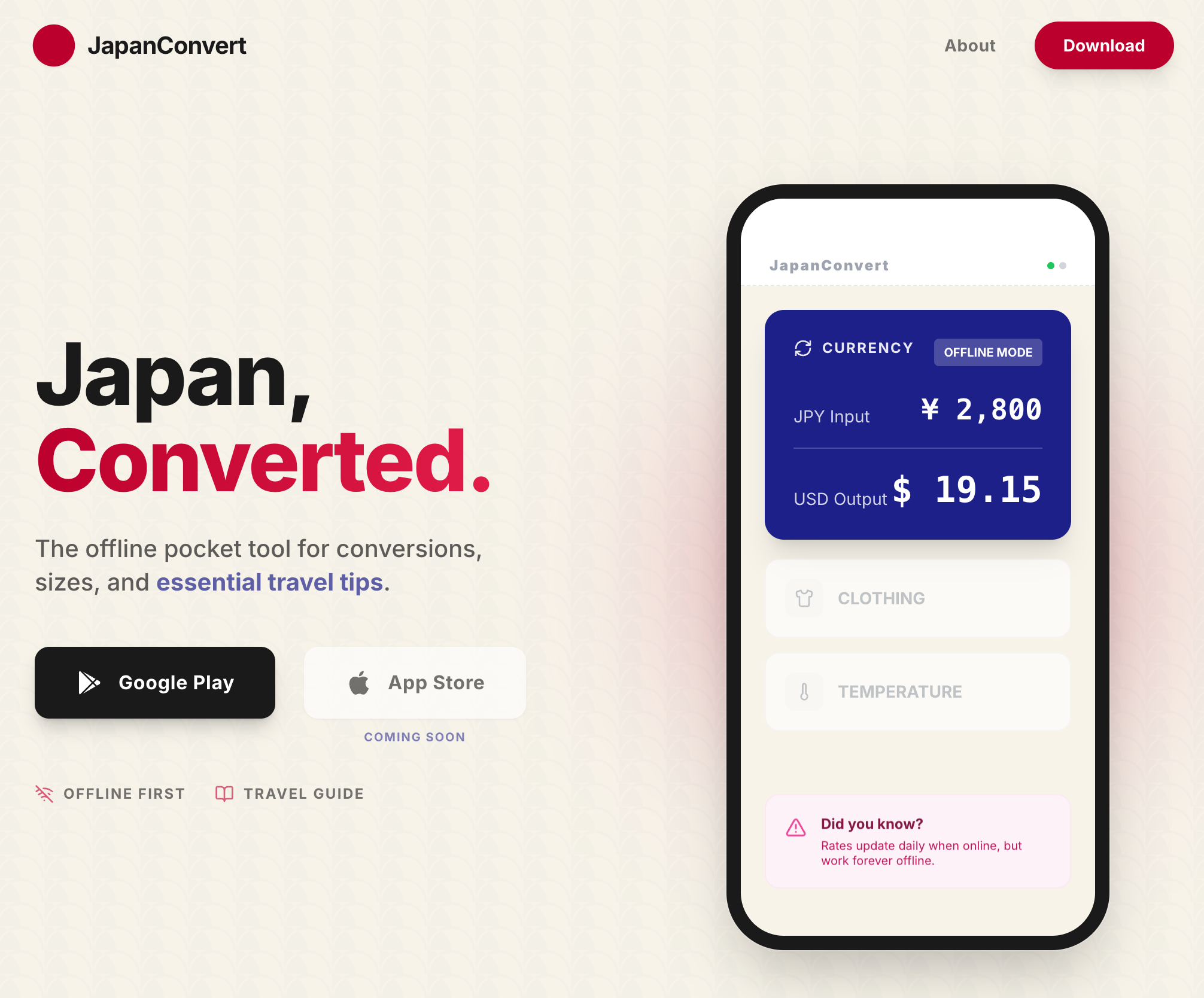
The app is in closed beta right now on the Google Play store, but I only submitted it for publication because it was so straightforward and easy to do. Once I had created something that worked for me, I figured at least one other person out there might benefit from it. Before long, a site and app complete with a travel guide was born.
There are a few other apps I built over the course of January during this experiment, but it is safe to say the barrier to entry and the time required to do mini projects like this has changed drastically in the last year.
Wabi and the Future of Personal Software
If Sora was a glimpse into what instantly generated viral videos could be like, then Wabi is a peek into what the future of personal and meme software will look like. That’s the whole idea behind Wabi. It’s so straightforward even a child can understand it. Just tell the app what you want, and it’ll build it for you. Easy idea, hard to execute, but the vision is here to stay.
I’m sure many of you tried tools like Replit or (if you were really ambitious) gave a shot at using tools like Rork. I tried creating a cheeky game with Replit last summer, and it totally sucked. It was barely playable, it would crash constantly, the physics were all off, and the tools at the time reached a point where you could only really get so complicated before even the AI would give up.

Now, Gemini can one-shot impressive looking clones of Tetris in a minute. The physics work, and it even has a music engine. I know, it’s just Tetris. But this is the kind of project that even just a decade ago would have been a college student’s project for a serious CS class! We all know where it goes from here. The same pattern we saw with video diffusion will happen with the generation of code and games.
First, it’s a total joke. Then it gets a little better. Then a little better. And then, you can’t distinguish it from reality. I’m sure many of you remember the original AI clip of Will Smith eating spaghetti. And, now we are here. Genie 3 blew people’s minds just a couple of weeks ago, and it has become increasingly clear that this new generative paradigm is touching everything we can see with our eyes on a screen.
The YOLO Software Era

One-shotting Tetris doesn’t mean that all SaaS software is at the risk of being devalued or deemed irrelevant. Personally building simple software to replace a few subscriptions doesn’t mean everything is going to die. But this is how it begins, and if we learned anything from last year, it is that the rate of progress is continually shocking and will only get more impressive and insane from here.
Startups can build solutions quicker, individuals can solve problems faster, and paradigms we got used to over the last 16 years are permanently changing forever. Playing around with the latest tools and keeping an open mind is key as we move forward into the year.
Thanks for reading.
- Chris